
What to check when a tracking event goes quiet
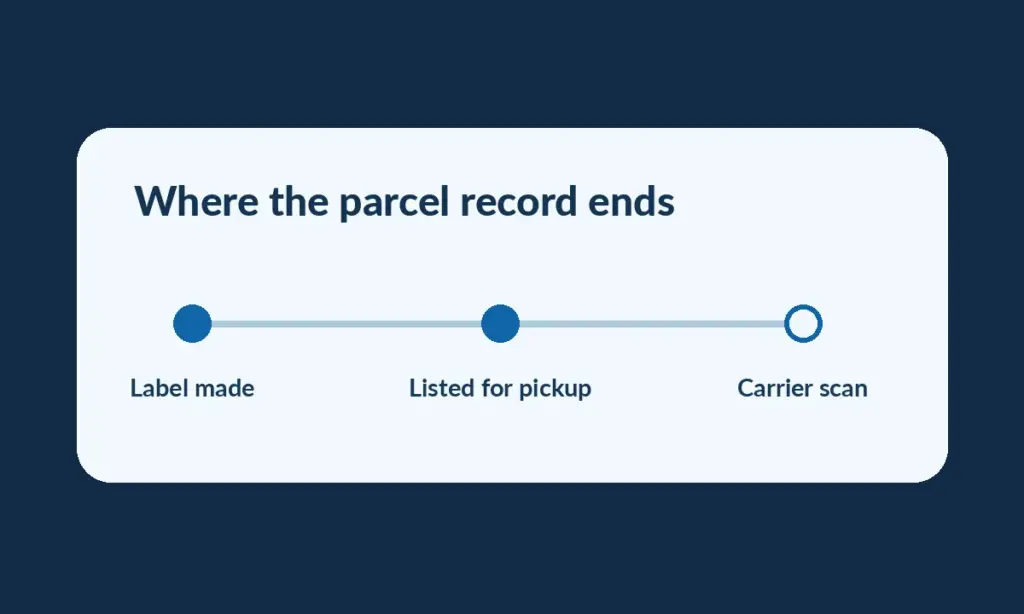
A blank afternoon in a parcel’s tracking history can mean several things. The warehouse may be holding the parcel, a shipping partner may have picked it up, or the next carrier may have received it without an item-level event showing up yet. Start with the last event that proves a step happened. It tells you where to look next.
Separate the label from the handoff
A tracking number can exist before a parcel leaves the warehouse. The USPS tracking guide describes electronic notice before acceptance. Its status guide distinguishes a created label, a shipping partner’s pickup and possession by USPS. Other carriers use their own labels. Open the carrier’s tracking page beside your order screen and keep the original wording in your notes.
In a warehouse system, check the events closest to the parcel. Which carton was packed? Does the dispatch manifest include that carton’s tracking number? Is there an item-level pickup scan, a batch acknowledgement, or only a label? A batch acknowledgement can help you trace the right manifest, while an item-level event gives you a better trail for that particular carton.
Walk one parcel back through the records
Suppose a fictional order shows a label at 14:10 and a warehouse manifest at 16:20. The carrier page still shows pre-shipment after the next morning’s check. Ask the dispatch lead to reconcile that tracking number with the manifest and look at the rest of the pickup batch. Several missing histories from the same batch justify asking about the handoff as a group. One missing history makes a misplaced parcel or an individual scan problem worth checking first.
Choose a next review time based on the actual service and the handoff you can confirm. Tell the customer what you know and when you’ll check again. “Our system shows it was packed yesterday. We’re checking the pickup record and will update you this afternoon” gives them a useful update without promising a delivery date you cannot verify.
Keep enough detail for the next shift
Save the parcel ID, latest event, event time with its timezone, source and next step. If your system records when it received the event, keep that time too. The next person can then distinguish a late data update from a quiet parcel and see who is following up.